
The Shoulder, the Cadaver Table and a Room Full of Questions: My Days at IAACON 2026
The hall in Ahmedabad filled up slowly on the morning of 22nd October. Surgeons settled into white-draped chairs, some still in scrub caps from the workshop next door. I stood at the front with a microphone and a topic that makes every shoulder surgeon a little uneasy: the complications of reverse shoulder arthroplasty.
Reverse shoulder replacement is one of the great success stories of our field. A shoulder with no working cuff, a joint crushed by arthritis, a fracture that nothing else can fix: reverse arthroplasty gives these patients their arm back. But every success story has a second chapter that we rarely tell.
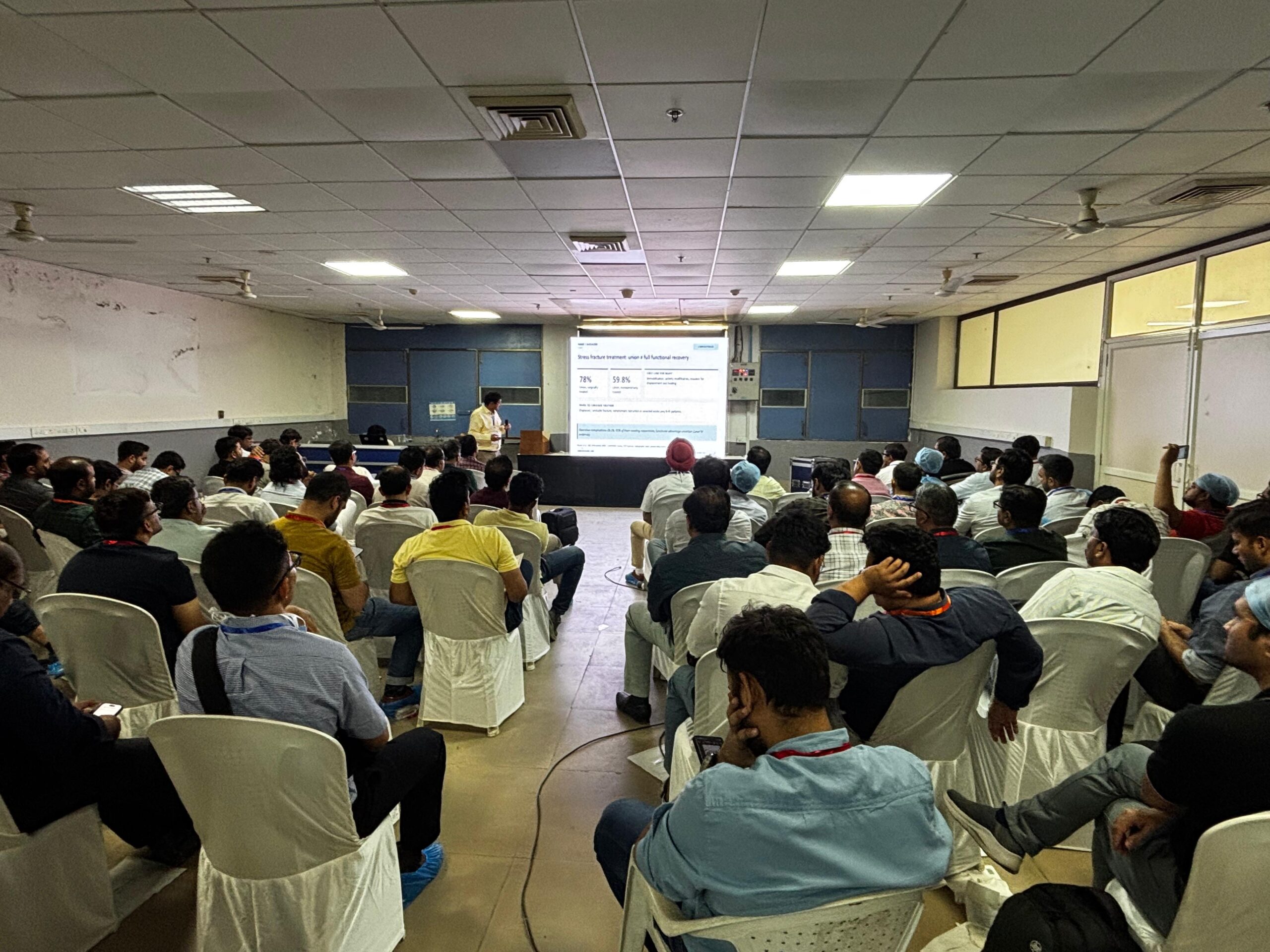
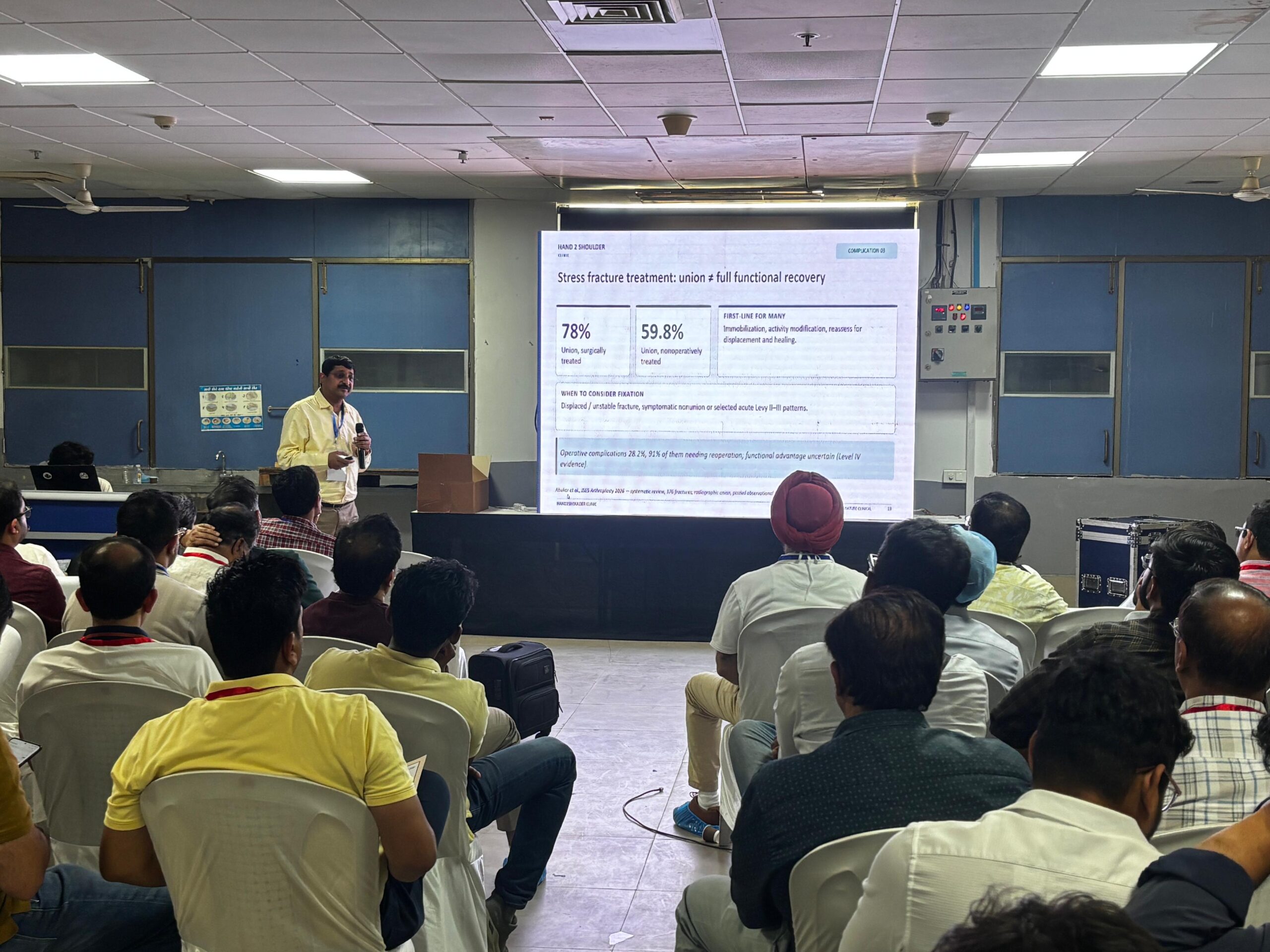
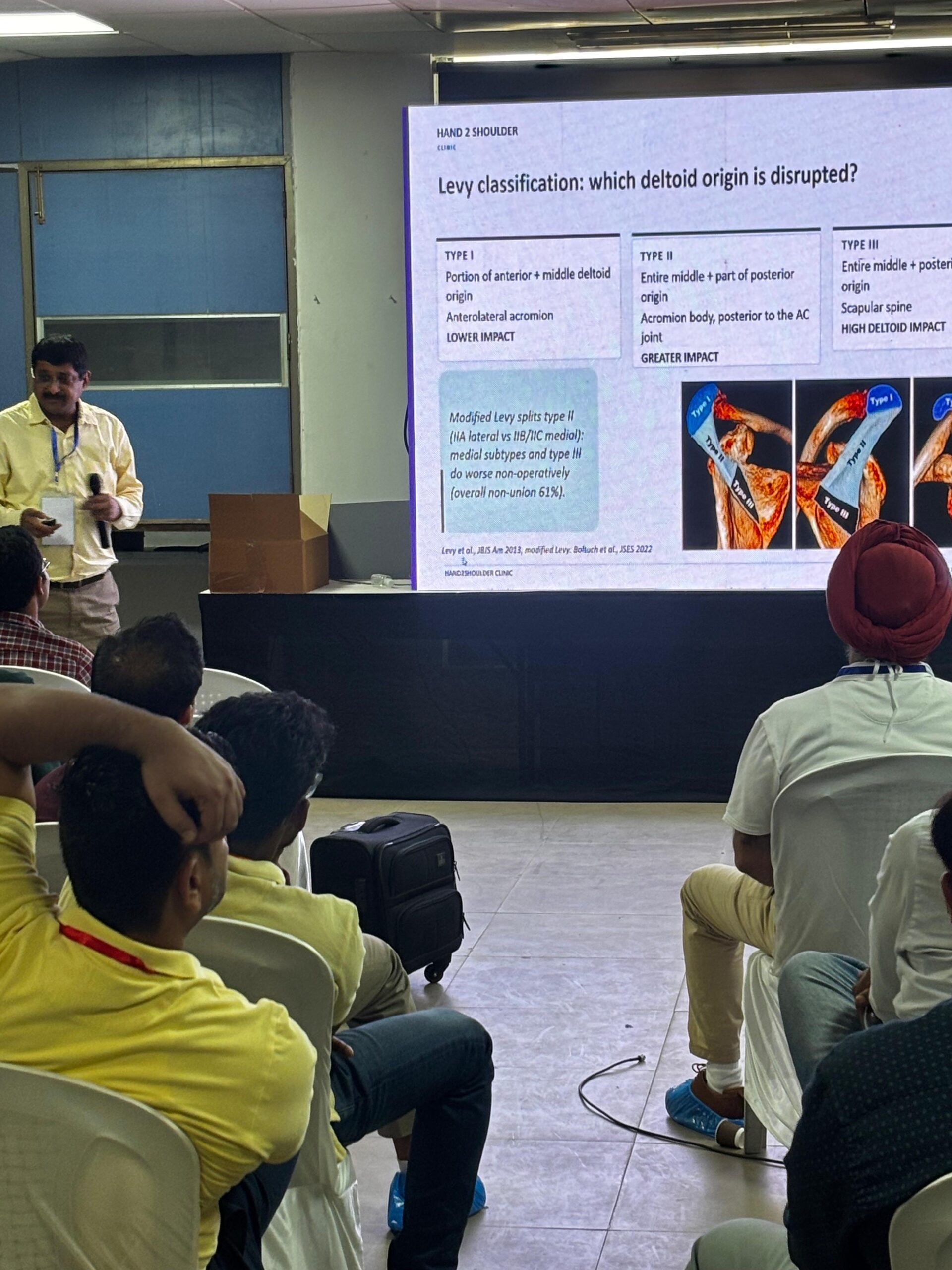
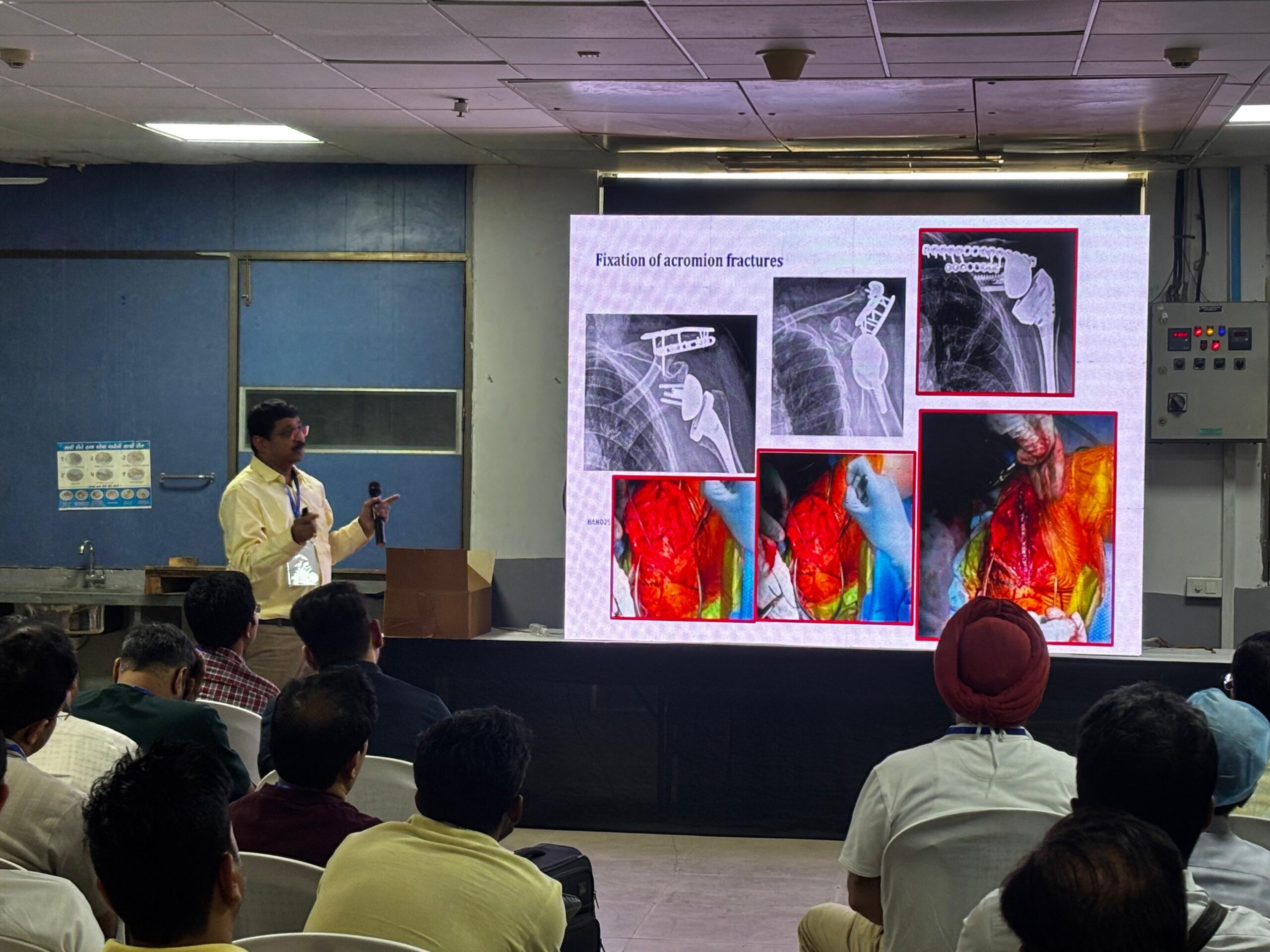
That chapter was my talk. I took the audience through the problems that follow a technically good operation: the dislocation that appears weeks later, the infection nobody wants to meet, and the quiet stress fracture of the acromion or scapular spine. That last one matters because the deltoid arises from that bone, and the whole reverse design depends on the deltoid. I showed how the Levy classification tells us which part of the deltoid origin has been lost, and why the higher types do so much worse without surgery. I also showed how we fix the acromion when it fails. The lesson I wanted them to carry out of that room was a simple one: the best way to handle a complication is to see it coming.
Where theory met bone
Then we walked next door, and the mood changed.
A cadaveric workshop has its own sound: drills, retractors, hushed instructions, the occasional laugh when something finally falls into place. Under the surgical lights, a group of young surgeons gathered around the table, some of them holding a glenoid reamer for the very first time.
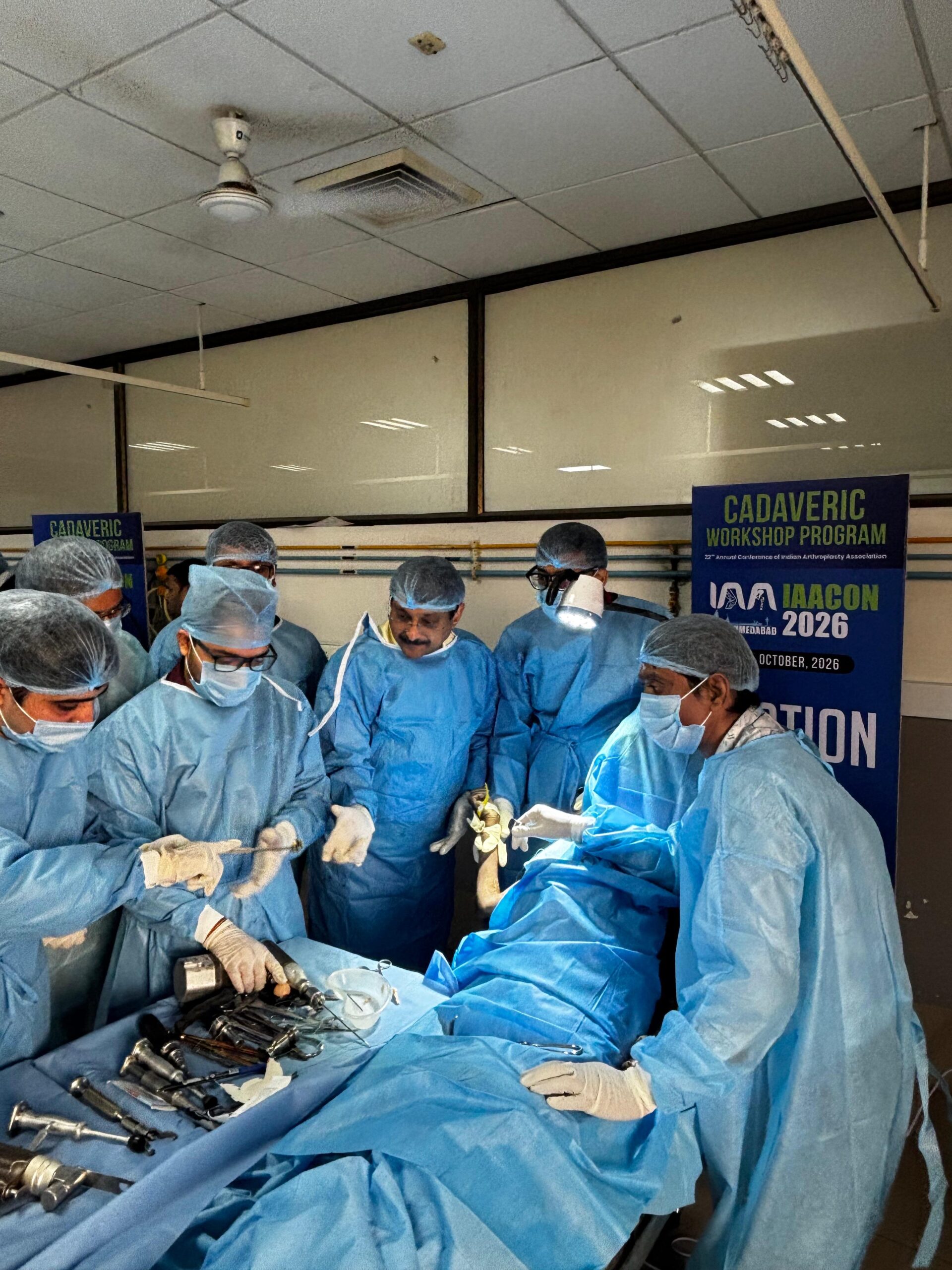
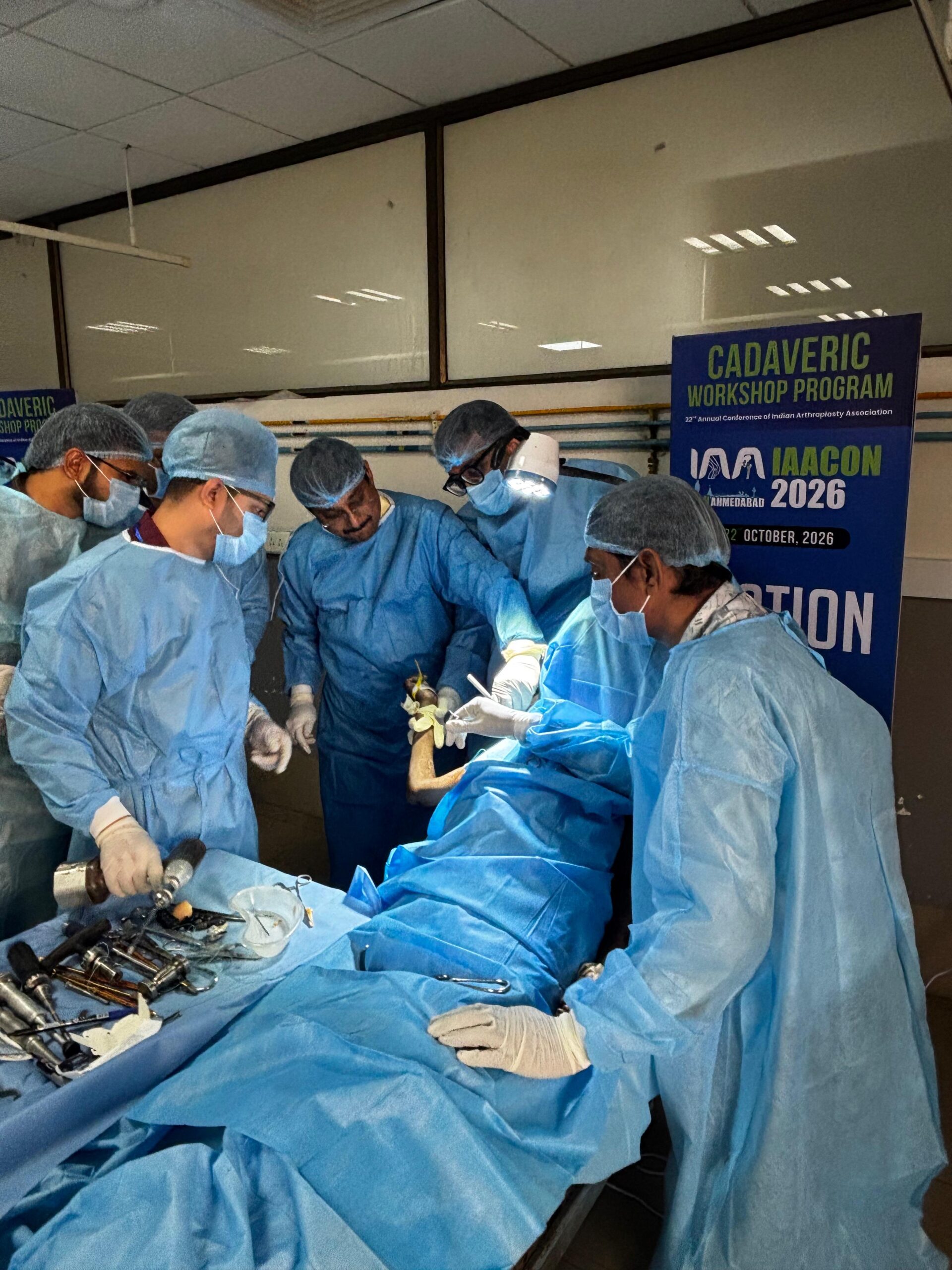
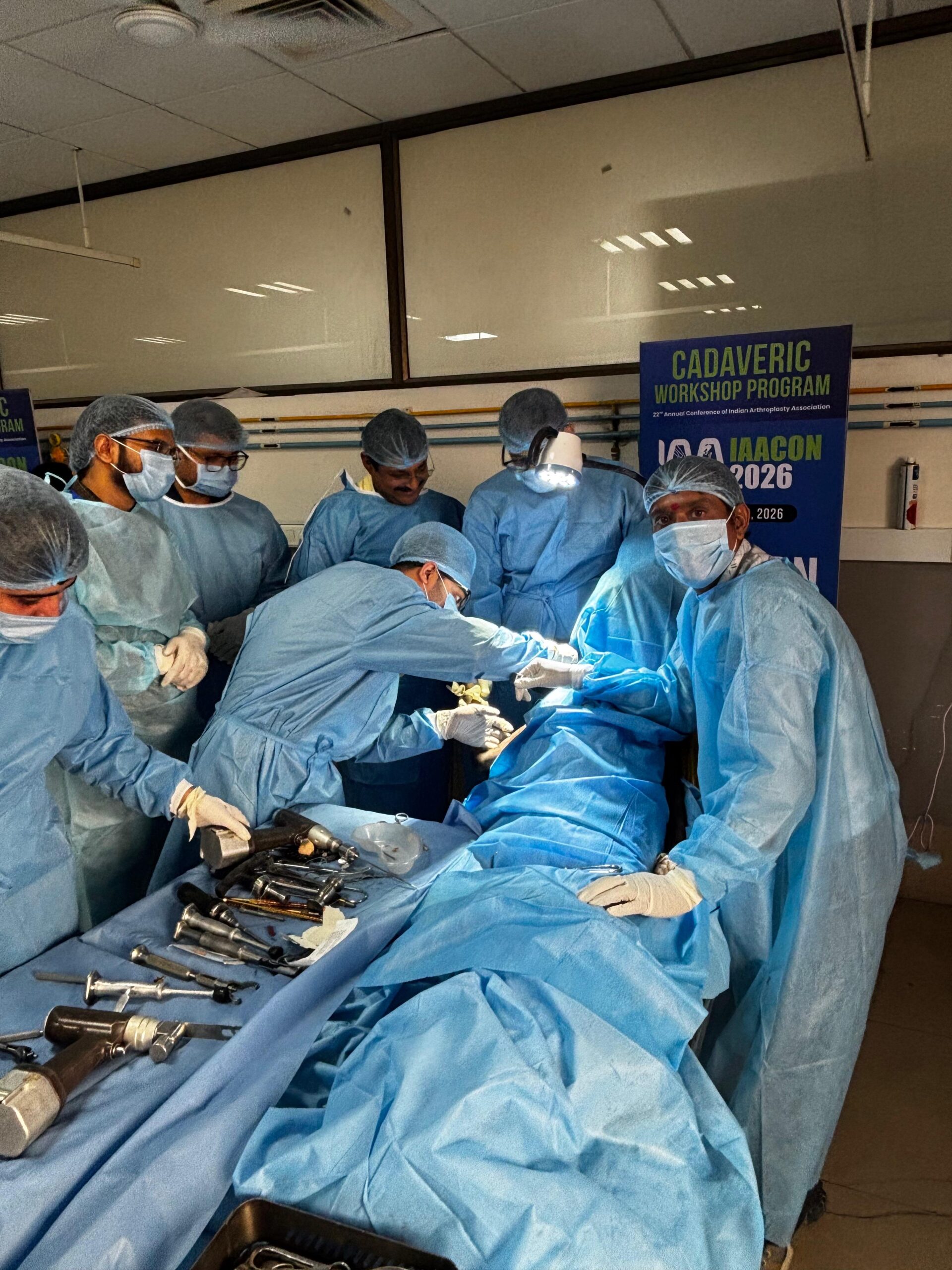
I have always believed that a lecture can give you knowledge but only a table can give you feel. So I stood beside them and guided them: where to expose, how to find the glenoid, how to place the baseplate, how it should feel when it sits right. Their hands were careful at first. By the end of the session they were steadier, and their questions were sharper. That change in their confidence was the best part of my day.
The question that divides us
On 23rd October, I returned to the podium with a question that still splits surgeons down the middle: what is the role of the subscapularis in reverse shoulder arthroplasty?
Some repair it every time. Some never bother. Both groups can point to good results. I spoke about what the tendon actually contributes, especially to anterior stability, and why the answer depends on the implant, the lateralisation, the pathology and the quality of the tissue we find once we are inside. My argument was that the decision should be made case by case, not by habit.
What followed was the part I enjoy most about any conference. The discussion opened up. Colleagues shared their own series and their own failures. Someone challenged my view, and someone else came to my defence. Nobody left with a single rule, but everybody left with better questions.
What I carried home
Complications are best handled before they happen: plan, position, tension and watch.
Skill is built with hands on the specimen, not slides on a screen.
The subscapularis deserves a decision, not a reflex.
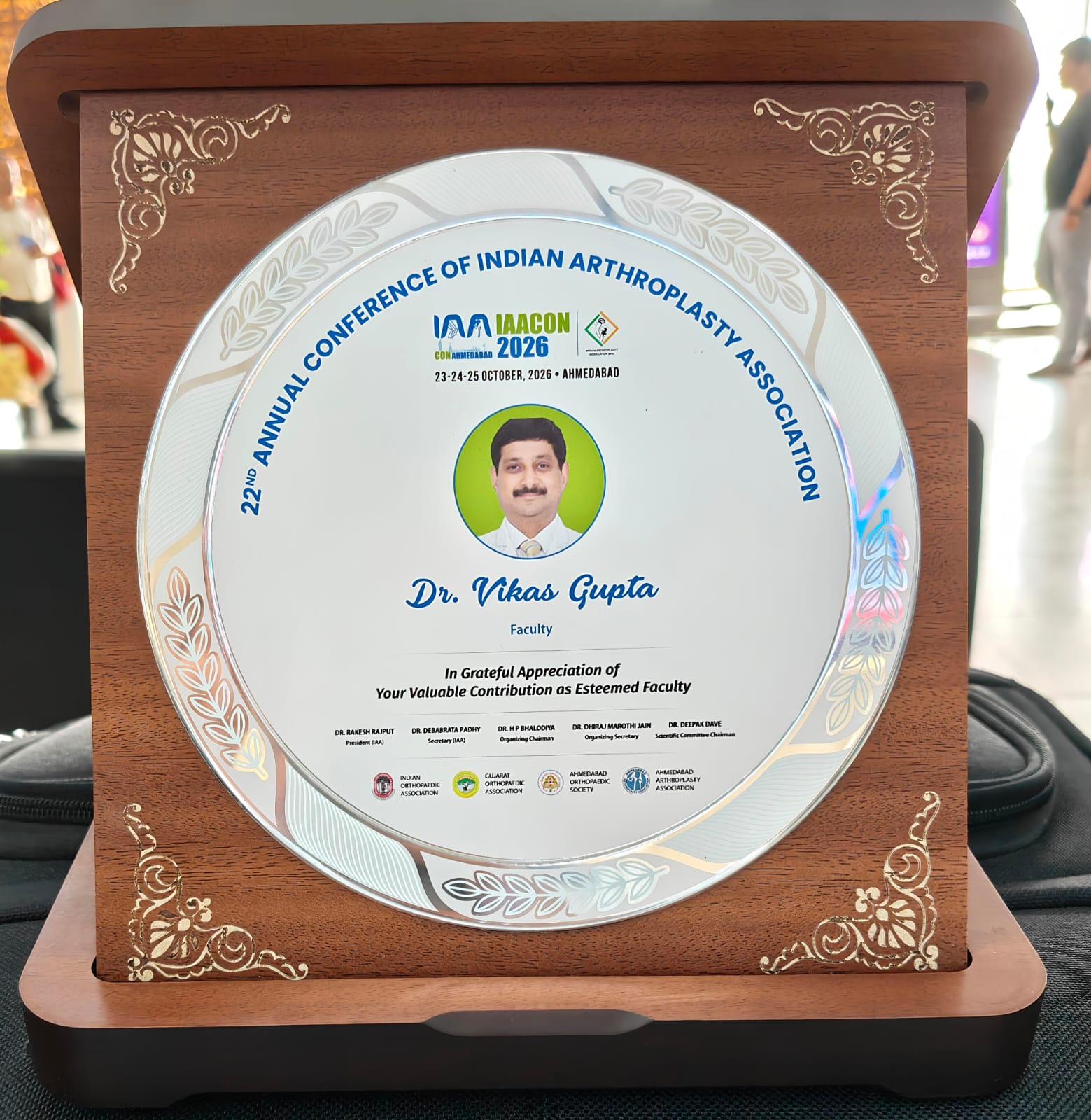
My thanks to the organising team and the Indian Arthroplasty Association for a warm, well-run meeting, and to every young surgeon who stood at that table and trusted me to guide their hands.
Dr. Vikas Gupta is Principal Director of the Division of Hand to Shoulder Surgery at Max Smart Super Speciality Hospital, Saket, New Delhi, and founder of Hand2Shoulder Clinic.