
The Fracture Everyone Missed: How a Young Cricketer Got Back to the Crease
A hook of hamate fracture story — diagnosed late, treated decisively, and back to full sport
The pain that wouldn’t quit
He was 24, an aggressive middle-order batsman, and for four months he had been playing through a dull ache deep in his palm — right at the base of the little finger. It flared every time he gripped the bat. It bit hardest on the cover drive.
He did what most athletes do. He rested. He iced. He strapped the wrist. He was told it was a “sprain.” An X-ray was reported as normal. So he kept playing — and kept losing power in his shots.
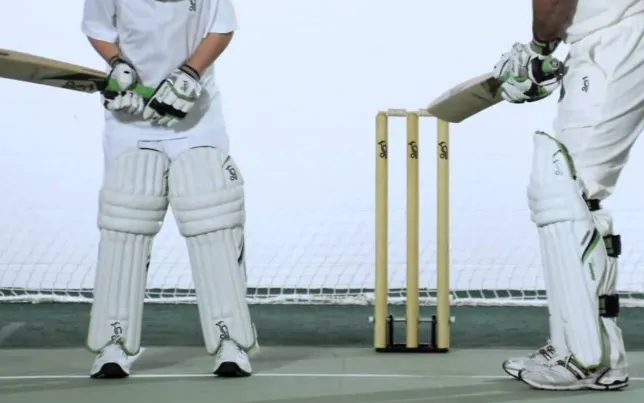
By the time he reached the Hand2Shoulder Clinic, the story had a familiar shape: months of grip pain, a weakening grip, and a diagnosis that kept slipping through the net.
The small hook that causes big trouble
The hook of hamate is a tiny, beak-shaped projection of one of the wrist’s carpal bones, sitting on the palm side near the little finger. It anchors ligaments and sits right beside the flexor tendons and the ulnar nerve.
In bat-and-racquet sports — cricket, golf, tennis, baseball — the butt of the handle presses directly over this hook during a hard swing. A mistimed shot, a jarring impact, or repeated loading can snap it.
The problem is what happens next:
- Plain X-rays miss it. The hook overlaps other bones on standard views, so a fracture hides in plain sight.
- The symptoms are vague. Deep palm pain and grip weakness get labelled a sprain or tendinitis.
- It rarely heals on its own. The hook has a poor blood supply, so a fracture left alone often becomes a painful non-union — the bone never knits.
Left untreated, a chronic hook fracture can go on to fray the flexor tendons of the little finger — occasionally rupturing them — or irritate the ulnar nerve. Small bone, serious consequences.
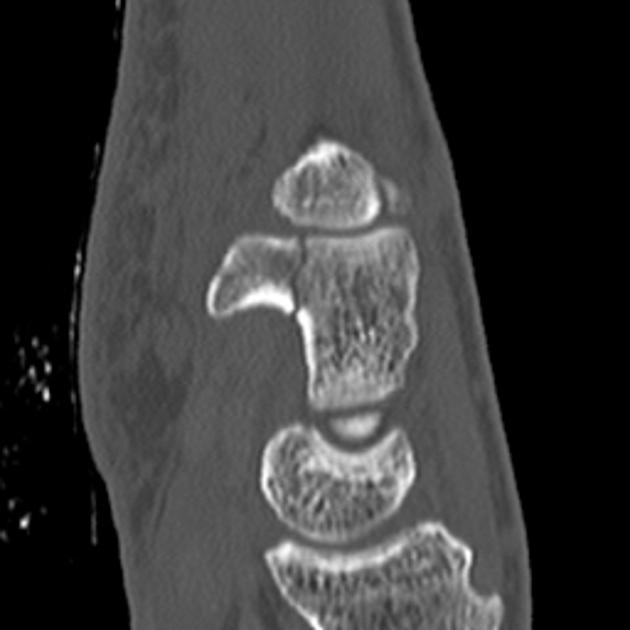
CT scan (axial/3D) showing the hook of hamate fracture. Suggested caption: “The fracture invisible on X-ray, revealed on CT.”
Getting the diagnosis right
At the clinic, the examination pointed straight to the hook. Pinpoint tenderness over the hook of hamate. Pain reproduced on resisted little-finger flexion. Grip strength measurably down on the affected side.
An X-ray again looked unremarkable — exactly as expected. The answer came from a CT scan, which showed a clean fracture through the hook that had failed to unite over four months. This is the single most important lesson of the case: when a grip-sport athlete has persistent palm-side wrist pain and a “normal” X-ray, the investigation isn’t over — it’s just beginning.
The surgery: why we removed the fragment
For a fresh hook fracture, we can sometimes fix the bone. But for an established non-union — a fragment that has already refused to heal for months — the most reliable, fastest route back to sport is to excise the hook fragment (surgical removal).
Dr. Vikas Gupta performed a hook of hamate excision through a small incision in the palm, carefully protecting the ulnar nerve and its branches and releasing the painful fragment. Removing the fragment eliminates the source of pain and takes the mechanical threat away from the neighbouring flexor tendons. Crucially, it does not compromise grip strength once healed — the hand functions normally without it.
The procedure was day-care. He went home the same day.

Intra-operative photo (excised fragment / surgical field). Suggested caption: “The non-united fragment, removed.”
From surgery to the crease
Recovery after excision is quicker than most patients expect:
- Weeks 1–2: Wound protection, elevation, gentle finger movement from day one.
- Weeks 2–4: Progressive wrist and grip mobility with guided hand therapy.
- Weeks 4–6: Strengthening — putty, grip work, sport-specific loading.
- Week 6–8: Return to batting drills, building back to full-intensity play.
He was pain-free within weeks, his grip returned to full strength, and he was back at the crease — driving through the covers without the flare that had haunted him for months.

Recovery/return-to-play shot: patient batting again, or a smiling follow-up clinical photo. Suggested caption: “Back to full sport — no pain, full grip.”
The takeaway for athletes and coaches
- Deep palm pain over the base of the little finger that gets worse with gripping is not a routine sprain. Take it seriously.
- A normal X-ray does not rule out a hook of hamate fracture. If pain persists, ask about a CT scan.
- Late is not too late. Even a fracture missed for months can be treated decisively, with an excellent return to sport.
- The right diagnosis is everything. Months of lost seasons usually trace back to a fracture that was simply never looked for in the right way.
If you’re an athlete — cricketer, golfer, tennis or racquet-sport player — living with stubborn grip-side wrist pain, don’t play through it indefinitely. A focused hand-surgery assessment can find what the standard tests miss.
This article is for general information and awareness. It is not a substitute for individual medical advice. Patient details have been anonymised.